I Was Doing Gratitude Wrong
Putting my son to bed feels like a special time each night.
Everything has quieted down, it's dark outside and we've gone through our routine: pajamas, brush teeth, use the bathroom, read a book together.
Sometimes it feels rushed, or I'm tired after a long day, but I try my best to slow things down and talk a little about our day.
And about a year ago I tried something new.
I want my son to be an appreciative person and I've heard a lot about how important gratitude is for our happiness and well-being.
So at the end of the day I started asking my son, "What were three things you were grateful for today?"
At first he played along and we explored different answers, but eventually he got tired of it. "Dada, can you not ask me that all the time?"
I felt that in the pit of my stomach. I wanted him to learn gratitude, but I didn't want to bore him or frustrate him.
Instead of asking for three things, I just asked for one thing.
But he got tired of that too.
What was I doing wrong?
I looked into the research and it turns out there is a lot of science behind gratitude. For the past three months I've been practicing it myself in a whole new way. And I have some exciting things to share with you.
We Get Used to Good Things
When something good happens it feels wonderful for a little while. We all know that feeling, whether it's a new house, new clothes or a new toy. But then it becomes normal. Our brain isn't ungrateful, it just gets used to things, tunes it out and focuses on what's next.
In psychology they call this hedonic adaptation. Gratitude is one of the best ways we can push back, but not by asking the same question over and over. Studies have shown it works best when things feel fresh.
Asking Why Matters
Martin Seligman did a study where people wrote down three things that went well that day and why. After one week of practice, people were happier and less depressed, and the effects lasted for months.
"I had a great call with my friend" is a nice moment. But "I had a great call with my friend because my wife was watching my son" goes deeper.
The good things that happen to us aren't random, they're connected to people and choices.
It's a Wonderful Life
In this study, named after one of my favorite movies, people imagined something good in their life like their romantic partner. One group focused on how they met. The second group imagined that it never happened.
That second group felt happier afterward.
Most people were surprised, they had predicted the opposite. But imagining loss doesn't make us feel worse, it makes us more appreciative.
Appreciation Appreciates
One last study focused on sharing gratitude with others. People consistently underestimated how happy recipients would feel and overestimated how awkward it would feel.
People you're grateful for would love to hear it much more than you think.
Okay, so what do we do with all of that science?
Well, I decided to experiment on myself.
And I Made You Something
Over the summer I built a Gratitude App and I've been using it myself for almost 100 days.
It's fun like Wordle, each day I get a new question and I can't check it ahead of time. I'm excited to see what it will be every day.
I designed the questions to be research-backed. And it has little fun features built in too like confetti and reminders of past answers.
I made the app for myself, but since I wrote about it here I wanted to make sure you could enjoy it too.
So this week I rebuilt it as an app you can use here at travishellstrom.com/gratitude.
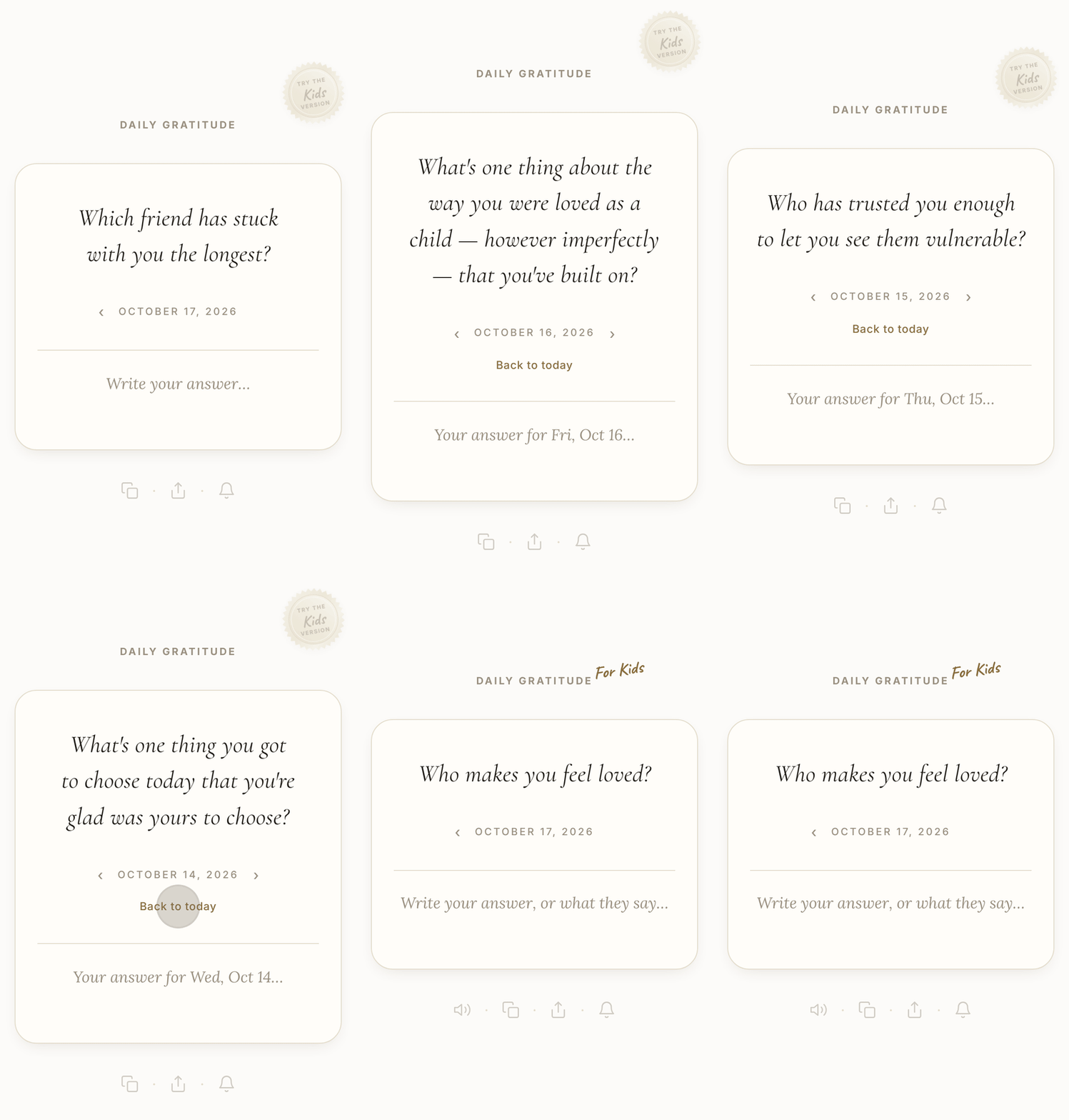
It's free and it saves all the information locally, which means it never leaves your browser or your phone. No one else can see your answers, it's just yours.
It's fun and simple and I hope you love it like I have.
I also just started a Gratitude for Kids app and tried it out with my son for the first time last night. This morning he asked me what the next question is.
Tonight we'll get to find out together.