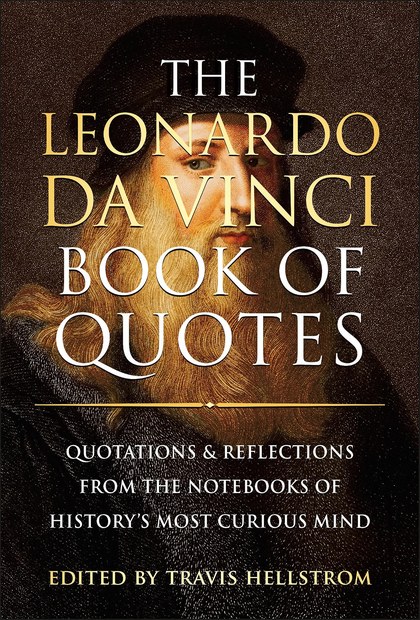
Curiosity & Wonder
17 quotes
Leonardo da Vinci filled his notebooks with thousands of questions he wanted answered. How does the tongue of a woodpecker work? What causes a yawn? Why does the sky change color at dusk? “The natural desire of good men is knowledge,” he wrote, and for Leonardo that desire never dimmed. These are the words of a man who never stopped asking why.
“Learning never exhausts the mind.” — Personal notebooks (1500)
“The noblest pleasure is the joy of understanding.” — Personal notebooks
“Study without desire spoils the memory, and it retains nothing that it takes in.” — Personal notebooks
“The smallest feline is a masterpiece.” — The Notebooks of Leonardo da Vinci (1883)
“All our knowledge has its origin in our perceptions.” — The Literary Works of Leonardo da Vinci
“Sleep resembles death. Ah, why then dost thou not work in such wise as that after death thou mayst retain a resemblance to perfect life, when, during life, thou art in sleep so like to the hapless dead?” — The Literary Works of Leonardo da Vinci
“Having wandered some distance among gloomy rocks, I came to the entrance of a great cavern. Suddenly there arose in me two contrary emotions:—fear of the threatening dark cave, desire to see whether there were any marvelous things within.” — Personal notebooks
“Truth was the only daughter of Time.” — The Literary Works of Leonardo da Vinci
“Learning acquired in youth holds back the decline of old age; and if you understand that old age has wisdom for its nourishment, you will so conduct yourself that your old age may lack for nothing.” — The Notebooks of Leonardo da Vinci (1938)
“All sciences are vain and full of errors that are not born of Experience, the mother of all Knowledge.” — The Notebooks of Leonardo da Vinci (1883)
“The average human looks without seeing, listens without hearing, touches without feeling, eats without tasting, moves without physical awareness, inhales without awareness of odor or fragrance, and talks without thinking.” — Personal notebooks
“Why does the eye see a thing more clearly in dreams than the imagination when awake?” — The Notebooks of Leonardo da Vinci (1883)
“The knowledge of all things is possible.” — The Notebooks of Leonardo da Vinci (1938)
“As you go about town, constantly observe, note, and consider the circumstances and behavior of men as they talk and quarrel, or laugh, or come to blows.” — Leonardo da Vinci (2017)
“Why did nature not ordain that one animal should not live by the death of another?” — The Notebooks of Leonardo da Vinci (1883)
“I roamed the countryside searching for answers to things I did not understand. Why shells existed on the tops of mountains. Why thunder lasts longer than that which causes it. How various circles of water form around the spot struck by a stone. These questions and other strange phenomena engaged my thought throughout my life.” — The Notebooks of Leonardo da Vinci (1938)
“It’s not enough that you believe what you see. You must also understand what you see.” — Personal notebooks (2016)
Art & Creativity
42 quotes
For Leonardo, art was not a profession. It was a way of seeing. He believed that the painter who understood nature most deeply would paint most truly, and so he dissected bodies to understand light on skin, studied water to understand how cloth folds, and observed birds to paint the weight of wings. Leonardo saw no boundary between art and science: both were, to him, a single act of careful attention to the world.
“Painting is poetry that is seen rather than felt, and poetry is painting that is felt rather than seen.” — Personal notebooks
“Art is never finished, only abandoned.” — Often attributed
“Where the spirit does not work with the hand, there is no art.” — Personal notebooks
“The painter has the universe in his mind and hands.” — Personal notebooks
“The good painter has to paint two principal things, man and the intention of his mind.” — Leonardo da Vinci (2017)
“A painter should begin every canvas with a wash of black, because all things in nature are dark except where exposed by the light.” — The Notebooks of Leonardo da Vinci (1938)
“A painter needs such mathematics as belong to painting.” — The Notebooks of Leonardo da Vinci (1883)
“The painter who draws merely by practice and by eye, without any reason, is like a mirror which copies every thing placed in front of it without being conscious of their existence.” — The Notebooks of Leonardo da Vinci (1883)
“The artist ought first to exercise his hand by copying drawings from the hand of a good master.” — The Notebooks of Leonardo da Vinci (1883)
“The natural desire of good men is knowledge.” — The Notebooks of Leonardo da Vinci (1938)
“The mind of the painter should be like a mirror which always takes the color of the thing that it reflects, and contains as many images as there are things placed before it.” — The Notebooks of Leonardo da Vinci (1954)
“Painting is the sole means of reproducing all the known works of nature.” — The Notebooks of Leonardo da Vinci (1992)
“The art of painting embraces and contains within itself all visible things.” — Trattato della Pittura (Zöllner)
“The painter strives and competes with nature.” — Trattato della Pittura (Zöllner)
“Whoever despises painting loves neither philosophy nor nature.” — Trattato della Pittura (Zöllner)
“The painter who has no doubts achieves little.” — On artistic humility
“The hand that delineates cannot do otherwise than be guided by the mind.” — Trattato della Pittura
“A painter is not admirable unless he is universal.” — Trattato della Pittura (Zöllner)
“Among all human opinions, that of the painter is most worthy; for he holds converse with nature.” — Trattato della Pittura (Zöllner)
“Art is the queen of all sciences communicating knowledge to all the generations of the world.” — Louvre Notebooks
“The object of the painter is to delight, to move, to convince.” — Louvre Notebooks
“What is fair in men, passes away, but not so in art.” — A Treatise on Painting (1651)
“We, by our arts may be called the grandsons of God.” — The Notebooks of Leonardo da Vinci (1883)
“A picture ought to be done in such a way as that the spectator may easily recognise, by means of their attitudes, the purpose in their minds.” — A Treatise on Painting (1651)
“Every painter paints himself.” — Florentine proverb
“Good painting is nothing else but a copy of the perfections of God and a recollection of His painting.” — Personal notebooks
“The painter who draws by practice alone sees nothing but the surface of what he copies.” — Personal notebooks
“The positions of the people are so infinite that the memory is incapable of retaining them, which is why you should keep these sketches as your guides.” — Leonardo da Vinci (2017)
“You may discover in the patterns on a stained wall a resemblance to various landscapes, adorned with mountains, rivers, rocks, trees, plains, and wide valleys. Or again you may see battles and figures in action, or strange faces and costumes. The mind is stimulated to new inventions by obscure things.” — Leonardo da Vinci (2017)
“If the painter wishes to see beauties that charm him, it lies within his power to create them; and if he wishes to see monstrosities that are frightful, buffoonish, or ridiculous, or pitiable, he can be lord thereof.” — Leonardo da Vinci (2017)
“Likewise in painting, I can do everything possible.” — Leonardo da Vinci (2017)
“The motions of men must be such as suggest their dignity or their baseness.” — The Notebooks of Leonardo da Vinci (1883)
“If you condemn painting, which is the only imitator of all visible works of nature, you will certainly despise a subtle invention which brings philosophy and subtle speculation to the consideration of the nature of all forms—seas and plains, trees, animals, plants and flowers. Hence we may justly call painting the grandchild of nature and related to God.” — The Notebooks of Leonardo da Vinci (1883)
“Many are they who have a taste and love for drawing, but no talent; and this will be discernible in boys who are not diligent and never finish their drawings with shading.” — The Notebooks of Leonardo da Vinci (1883)
“Sculptured figures which appear to be in motion will, in their standing position, actually look as if they were falling forward.” — The Notebooks of Leonardo da Vinci (1883)
“It is better to imitate ancient than modern work.” — Thoughts on Art and Life (1906)
“Helen of Troy, gazing in a mirror in her old age, wondered how she had twice been ravished. Mortal beauty vanishes unless it is rescued by art from destroying age and death.” — Thoughts on Art and Life (1906)
“The worst evil which can befall the artist is that his work should appear good in his own eyes.” — Delphi Complete Works of Leonardo da Vinci (2014)
“Art lives from constraints and dies from freedom.” — Personal notebooks
“A beautiful body perishes, but a work of art dies not.” — Personal notebooks (2011)
“There are three aspects to perspective: how the size of objects seems to diminish according to distance; how colors change the farther away they are; and how objects ought to be finished less carefully the farther away they are.” — Leonardo da Vinci’s Advice to Artists (1990)
“Painting is a mental thing.” — Personal notebooks
Nature & Science
40 quotes
Leonardo filled more than 7,200 pages of notebooks with observations of the natural world. He watched water move around rocks for hours, mapped the stars, studied the geology of mountains, and designed machines that would not be built for centuries. Where others saw a river, Leonardo saw hydraulics. Where others saw a bird, he saw the mathematics of flight. Martin Kemp, the leading Leonardo scholar, writes that he sought “the rational principles that unify natural phenomena across all domains.”
“Nature is the source of all true knowledge. She has her own logic, her own laws, she has no effect without cause nor invention without necessity.” — Personal notebooks
“Water is the driving force of all nature.” — Personal notebooks
“The human foot is a masterpiece of engineering and a work of art.” — Personal notebooks
“The function of muscle is to pull and not to push, except in the case of the genitals and the tongue.” — The Notebooks of Leonardo da Vinci (1883)
“Nature never breaks her own laws.” — The Notebooks of Leonardo da Vinci (1883)
“A bird is an instrument working according to mathematical law—an instrument it is within the capacity of man to reproduce.” — Codex on the Flight of Birds
“This earth therefore seeks to lose its life, desiring only continual reproduction; and as, by the argument you bring forward and demonstrate, like effects always follow like causes, animals are the image of the world.” — The Notebooks of Leonardo da Vinci (1883)
“The human body is a machine which winds its own springs; it is the living image of perpetual motion.” — The Notebooks of Leonardo da Vinci (1954)
“The shadows of shadows of shadows of a body will be compounded of all the aforesaid tints intermingled.” — On light, shadow, and perspective
“In order to arrive at knowledge of the motions of birds in the air, it is first necessary to acquire knowledge of the winds, which we will prove by the motions of water in itself.” — Louvre Notebooks
“The rivers are the veins of the earth, and the tides are its breathing.” — Louvre Notebooks
“The span of a man’s outstretched arms is equal to his height.” — Louvre Notebooks
“Mechanics is the paradise of the mathematical sciences because by means of it one comes to the fruits of mathematics.” — The Notebooks of Leonardo da Vinci (1883)
“The earth is not in the centre of the Sun’s orbit nor at the centre of the universe, but in the centre of its companion elements, and united with them.” — The Notebooks of Leonardo da Vinci (1883)
“Let no man who is not a Mathematician read the elements of my work.” — The Notebooks of Leonardo da Vinci (1883)
“In nature there is no effect without a cause; understand the cause and you will have no need of the experiment.” — Personal notebooks
“A wave is never found alone, but is mingled with the other waves.” — Personal notebooks
“The air moves like a river and carries the clouds with it; just as running water carries all the things that float upon it.” — The Notebooks of Leonardo da Vinci (1883)
“All knowledge originates in our perceptions.” — Personal notebooks
“The sun has never seen any shadow.” — The Notebooks of Leonardo da Vinci (1883)
“Everything in nature grows and multiplies according to a fixed rule.” — Personal notebooks
“The body of the earth is of the nature of a fish—a fish that breathes by means of its own juices.” — Personal notebooks
“There shall be wings! If the accomplishment be not for me, ’tis for some other.” — The Notebooks of Leonardo da Vinci (1883)
“Oh mighty and once-living instrument of nature, your vast strength was to no avail.” — Leonardo da Vinci (2017)
“See how the wings, striking against the air, sustain the heavy eagle in the thin air on high. As much force is exerted by the object against the air as by the air against the object.” — Leonardo da Vinci (2017)
“The force of gravity acts in the direction of an imaginary line between the centers of each object.” — Leonardo da Vinci (2017)
“The veins of the earth carry the blood that keeps the mountains alive.” — Leonardo da Vinci (2017)
“The point, being indivisible, occupies no space. That which occupies no space is nothing. The limiting surface of one thing is the beginning of another.” — The Notebooks of Leonardo da Vinci (1883)
“The air is filled with endless images of the objects distributed in it; and all are represented in all, and all in one, and all in each.” — The Notebooks of Leonardo da Vinci (1883)
“Every body in light and shade fills the surrounding air with infinite images of itself, diffused in the air and conveying the nature, colour and form of the body which produces it.” — The Notebooks of Leonardo da Vinci (1883)
“If you transmit the rays of the sun through a hole in the shape of a star, you will see a beautiful effect of perspective in the spot where the sunlight falls.” — The Notebooks of Leonardo da Vinci (1883)
“The atmosphere is blue by reason of the darkness above it, because black and white together make blue.” — The Notebooks of Leonardo da Vinci (1883)
“Among all the studies of natural causes and reasons, light chiefly delights the beholder; and among the great features of mathematics, the certainty of its demonstrations is what most elevates the mind of the investigator.” — The Notebooks of Leonardo da Vinci (1883)
“The part always has a tendency to reunite with its whole in order to escape from its imperfection.” — The Notebooks of Leonardo da Vinci (1883)
“The motive power is the cause of all life.” — The Notebooks of Leonardo da Vinci (1883)
“There is no certainty in sciences where one of the mathematical sciences cannot be applied, or which are not in relation with mathematics.” — The Notebooks of Leonardo da Vinci (1883)
“Science is the observation of things possible, whether present or past; prescience is the knowledge of things which may come to pass, though but slowly.” — The Notebooks of Leonardo da Vinci (1883)
“Nature is full of infinite causes that have never occurred in experience.” — The Notebooks of Leonardo da Vinci (1883)
“The sun gives spirit and life to plants and the earth nourishes them with moisture.” — The Notebooks of Leonardo da Vinci (1883)
“Bountiful nature has provided that in all parts of the world you will find something to imitate.” — Thoughts on Art and Life (1906)
Learning & Experience
28 quotes
Leonardo had almost no formal education. He taught himself Latin as an adult and was dismissed by some contemporaries as merely a craftsman. He did not care. “Study without thought is labor lost,” he might have said, but his deeper conviction was even bolder: that experience, not books, was the only true teacher. Isaacson writes that Leonardo “came to believe that knowledge comes from observation.” These are the words of someone who trusted his own eyes above all authority.
“Experience does not err. Only your judgments err by expecting from her what is not in her power.” — Personal notebooks
“Experience is never at fault; it is only your judgment that is in error, in promising itself such results from experience as are not caused by our experiments.” — The Notebooks of Leonardo da Vinci (1938)
“All our knowledge is the offspring of our perceptions.” — Thoughts on Art and Life (1906)
“Nothing strengthens authority so much as silence.” — Often attributed
“Poor is the pupil who does not surpass his master.” — Leonardo da Vinci (2017)
“Knowing is not enough; we must apply. Being willing is not enough; we must do.” — Leonardo da Vinci (2017)
“Just as food eaten without appetite is a tedious nourishment, so does study without zeal damage the memory by not assimilating what it absorbs.” — The Notebooks of Leonardo da Vinci (1883)
“He who loves practice without theory is like the sailor who boards ship without a rudder and compass and never knows where he may cast.” — The Notebooks of Leonardo da Vinci (1883)
“The acquisition of knowledge is always of use to the intellect, because it may thus drive out useless things and retain the good.” — The Notebooks of Leonardo da Vinci (1883)
“Wisdom is the daughter of experience.” — The Notebooks of Leonardo da Vinci (1883)
“I thought I was learning to live; I was only learning to die.” — The Notebooks of Leonardo da Vinci (1938)
“Science is the captain, practice the soldier.” — Personal notebooks
“To develop a complete mind: study the art of science, study the science of art. Learn how to see. Realize that everything connects to everything else.” — Zöllner
“Just as eating contrary to the inclination is injurious to the health, so study without desire spoils the memory.” — Louvre Notebooks
“My works are the issue of pure and simple experience, who is the one true mistress.” — The Notebooks of Leonardo da Vinci (1883)
“Experience is a truer guide than the words of others.” — Thoughts on Art and Life (1906)
“Learning is the only thing the mind never exhausts, never fears, and never regrets.” — Thoughts on Art and Life (1906)
“Anyone who in discussion relies upon authority uses not his understanding, but rather his memory.” — The Notebooks of Leonardo da Vinci (1883)
“He who has no doubt advances little.” — Personal notebooks
“If you wish to have a sound knowledge of the forms of objects, begin with the details of them, and do not go on to the second step until you have the first well fixed in memory.” — Leonardo da Vinci (2017)
“Practice must always be founded on sound theory.” — Leonardo da Vinci (2017)
“Though I may not quote other authors, I shall rely on that which is much greater and more worthy—on experience, the mistress of their masters.” — The Notebooks of Leonardo da Vinci (1883)
“Experience, the interpreter between formative nature and the human race, teaches how nature acts among mortals; and being constrained by necessity cannot act otherwise than as reason, which is its helm, requires her to act.” — The Notebooks of Leonardo da Vinci (1883)
“I myself have proved it to be of no small use, when in bed in the dark, to recall in fancy the external details of forms previously studied; and this is certainly an admirable exercise, and useful for impressing things on the memory.” — The Notebooks of Leonardo da Vinci (1883)
“Knowledge shall always bear witness like a clarion to its creator, since knowledge is the daughter of its creator, and not the step-daughter, like wealth.” — Thoughts on Art and Life (1906)
“In the days of thy youth, seek to obtain that which shall compensate the losses of thy old age. If thou understandest that old age is fed with wisdom, so conduct thyself in youth that sustenance may not be lacking to thy old age.” — Thoughts on Art and Life (1906)
“Knowledge of the past and of the places of the earth is the ornament and food of the mind of man.” — Thoughts on Art and Life (1906)
“Men of worth naturally desire knowledge.” — Thoughts on Art and Life (1906)
Human Nature
24 quotes
Leonardo studied the human body with the same intensity he brought to rivers and rock formations. He dissected more than thirty corpses to understand muscle, nerve, and bone. But he was equally fascinated by what anatomy could not explain: why people weep, why they laugh, why the face reveals what the heart tries to hide. “Nothing strengthens authority so much as silence,” he wrote. He observed people the way he observed everything else, with patience and without illusion.
“The greatest deception men suffer is from their own opinions.” — Personal notebooks
“To speak well of a base man is much the same as speaking ill of a good man.” — Personal notebooks
“He who does not punish evil commands it to be done.” — Personal notebooks
“Men who desire nothing but material riches and are absolutely devoid of the desire for wisdom, which is the sustenance and truly dependable wealth of the mind.” — Personal notebooks
“Nothing can be loved or hated unless it is first known.” — Personal notebooks
“The desire to know is natural to good men.” — Personal notebooks
“As every divided kingdom falls, so every mind divided between many studies confounds and undoes itself.” — The Notebooks of Leonardo da Vinci (1883)
“Intellectual passion drives out sensuality.” — Notebooks (1508–1518)
“The truth of things is the chief nutriment of superior intellects.” — The Notebooks of Leonardo da Vinci (1954)
“The deeper the feeling, the greater the pain.” — The Notebooks of Leonardo da Vinci (1954)
“I have offended God and mankind because my work did not reach the quality it should have.” — Attributed deathbed words
“Oysters open completely when the moon is full; and when the crab sees one it throws a piece of stone or seaweed into it and the oyster cannot close again so that it serves the crab for meat. Such is the fate of him who opens his mouth too much and thereby puts himself at the mercy of the listener.” — The 48 Laws of Power (2000)
“If you are alone you belong entirely to yourself. If you are accompanied by even one companion you belong only half to yourself, or even less in proportion to the thoughtlessness of his conduct.” — The Notebooks of Leonardo da Vinci (1883)
“One has no right to love or hate anything if one has not acquired a thorough knowledge of its nature. Great love springs from great knowledge of the beloved object, and if you know it but little you will be able to love it only a little or not at all.” — Notebooks
“There are four powers: memory and intellect, desire and covetousness. The first two are mental and the others sensual.” — The Notebooks of Leonardo da Vinci (1883)
“O neglectful Nature, why are you so partial—becoming to some of your children a tender and gentle mother, and to others a most cruel and ruthless stepmother?” — The Notebooks of Leonardo da Vinci (1883)
“O Man, who will discern in this work of mine the wonderful works of Nature—reflect how much more criminal it is to take the life of a man than to destroy it. For the soul that dwells in that structure is a thing divine. Leave it then to dwell in His work at His good will and pleasure, and let not your rage or malice destroy a life—for indeed, he who does not value it, does not himself deserve it.” — The Notebooks of Leonardo da Vinci (1883)
“The soul is content to stay imprisoned in the human body, for through it she has her senses; but without them she would be imperfect.” — Notebooks (2008)
“King of the animals—as thou hast described him—I should rather say king of the beasts, thou being the greatest, because thou hast spared slaying them only in order to fill your gullet.” — The Notebooks of Leonardo da Vinci (1883)
“Love, Fear, and Esteem—write these on three stones.” — The Notebooks of Leonardo da Vinci (1883)
“The soul seems to reside in the judgment, and the judgment would seem to be seated in that part where all the senses meet; and this is called the Common Sense.” — The Notebooks of Leonardo da Vinci (1883)
“The sense ministers to the soul, and not the soul to the senses; and where the sense that ministers ceases to serve the soul, all the functions of that sense are lacking in life.” — Thoughts on Art and Life (1906)
“I have found that in the composition of the human body, as compared with the bodies of animals, the organs of sense are duller and coarser. Thus it is composed of less ingenious instruments, and of spaces less capacious for receiving the faculties of sense.” — Personal notebooks (2016)
“The soul of the mother first constructs in the womb the form of the man, and in due time awakens the soul that is to inhabit it.” — The Notebooks of Leonardo da Vinci (1883)
Still curious? Good.
“Learning never exhausts the mind.” I write a short essay every Saturday morning for people who keep asking why.
Free forever. No spam. Unsubscribe anytime.
Beauty & Perception
21 quotes
Leonardo believed the eye was the most powerful instrument a human being possessed. “The eye is the window of the soul,” he wrote. He spent years studying optics, light, shadow, and the way the eye deceives itself. For him, beauty was not an accident or a feeling. It was a law of nature, as precise and discoverable as the laws governing water or the movement of planets. These are the words of someone who looked at the world not casually, but with full, open attention.
“Beauty perishes in life, but is immortal in art.” — Often attributed
“The eye, which is called the window of the soul, is the principal means by which the central sense can most completely and abundantly appreciate the infinite works of Nature.” — Personal notebooks
“The eye, whose function we so certainly know by experience, has, down to my own time, been defined by an infinite number of authors as one thing; but I find, by experience, that it is quite another.” — The Notebooks of Leonardo da Vinci (1883)
“There are three classes of people: those who see, those who see when they are shown, and those who do not see.” — Personal notebooks
“The eye encompasses the beauty of the whole world.” — Personal notebooks
“When both eyes direct the pyramid of sight to an object, that object becomes clearly seen and comprehended by the eyes.” — The Notebooks of Leonardo da Vinci (1883)
“Now do you not see that the eye embraces the beauty of the whole world? It counsels and corrects all the arts of mankind… it is the prince of mathematics, and the sciences founded on it are absolutely certain.” — The Notebooks of Leonardo da Vinci (1883)
“Shadow is not the absence of light, merely the obstruction of the luminous rays by an opaque body. Shadow is of the nature of darkness. Light is of the nature of a luminous body; one conceals and the other reveals.” — The Notebooks of Leonardo da Vinci (1883)
“A luminous body will appear more brilliant in proportion as it is surrounded by deeper shadow.” — The Notebooks of Leonardo da Vinci (1883)
“Darkness is absence of light. Shadow is diminution of light.” — The Notebooks of Leonardo da Vinci (1883)
“When the eye is placed between the luminous body and the objects illuminated by it, these objects will be seen without any shadow.” — The Notebooks of Leonardo da Vinci (1883)
“Shadow is the means by which bodies display their form. The forms of bodies could not be understood in detail but for shadow.” — The Notebooks of Leonardo da Vinci (1883)
“The swan is white without any spot, and it sings sweetly as it dies, its life ending with that song.” — Leonardo da Vinci (2017)
“An object will display the greatest difference of light and shade when it is seen in the strongest light. But this should not be much used in painting, because the works would be crude and ungraceful. In everything, extremes are to be avoided: too much light gives crudeness; too little prevents our seeing.” — Leonardo da Vinci (2017)
“Shadow is a more powerful agent than light, for it can impede and entirely deprive bodies of their light, while light can never entirely expel shadow from an opaque body.” — The Notebooks of Leonardo da Vinci (1883)
“The eye can best distinguish the forms of objects when it is placed between the shaded and the illuminated parts.” — The Notebooks of Leonardo da Vinci (1883)
“A shadow may be infinitely dark, and also of infinite degrees of absence of darkness. The beginnings and ends of shadow lie between the light and darkness and may be infinitely diminished and increased.” — The Notebooks of Leonardo da Vinci (1883)
“Consider in the streets at nightfall the faces of men and women when it is bad weather: what grace and sweetness they manifest.” — Thoughts on Art and Life (1906)
“Look at light and admire its beauty. Close your eyes, and then look again: what you saw is no longer there, and what you will see later is not yet.” — Personal notebooks (2008)
“The color of the object illuminated partakes of the color of that which illuminates it.” — The Notebooks of Leonardo da Vinci (1883)
“Very great charm of shadow and light is to be found in the faces of those who sit in the doors of dark houses. The eye of the spectator sees that part of the face in shadow lost in the darkness, and that part lit drawing its brilliancy from the splendour of the sky.” — The Notebooks of Leonardo da Vinci (1883)
Action & Mastery
23 quotes
Leonardo’s notebooks are full of to-do lists. Buy meat. Describe the tongue of a woodpecker. Learn from Luca how to fix a window. Visit the master of arithmetic. He believed deeply in the discipline of doing: that knowledge without application was worth nothing. “Iron rusts from disuse,” he wrote, “stagnant water loses its purity, and in cold weather becomes frozen; even so does inaction sap the vigor of the mind.” Leonardo understood this truth from experience: his greatest works came from relentless effort, not inspiration alone.
“I love those who can smile in trouble.” — Often attributed
“Iron rusts from disuse; water loses its purity from stagnation; even so does inaction drain the vigor of the mind.” — Personal notebooks
“Obstacles cannot crush me; every obstacle yields to stern resolve. He who is fixed to a star does not change his mind.” — Personal notebooks
“Oh! speculators on things, boast not of knowing the things that nature ordinarily brings about; but rejoice if you know the end of those things which you yourself devise.” — The Notebooks of Leonardo da Vinci (1883)
“Men of lofty genius when they are doing the least work are most active.” — The Notebooks of Leonardo da Vinci (1883)
“Every action needs to be prompted by a motive.” — The Notebooks of Leonardo da Vinci (1883)
“It is easier to resist at the beginning than at the end.” — The Notebooks of Leonardo da Vinci (1883)
“You can have no dominion greater than that over yourself.” — The Notebooks of Leonardo da Vinci (1938)
“I have from an early age abjured the use of meat, and the time will come when men such as I will look upon the murder of animals as they now look upon the murder of men.” — The Notebooks of Leonardo da Vinci (1938)
“He turns not back who is bound to a star.” — The Notebooks of Leonardo da Vinci (1938)
“Nothing is stronger than habit.” — The Notebooks of Leonardo da Vinci (1938)
“Threats only frighten the undecided; firm souls make no account of them.” — The Notebooks of Leonardo da Vinci (1938)
“Every action done in company ought to be done with some sign of living accord.” — The Notebooks of Leonardo da Vinci (1954)
“The greatest misfortune is when theory outstrips performance.” — On action and theory (Zollner)
“I wish to work miracles.” — Louvre notebooks (1490)
“Movement will cease before we are weary of being useful.” — The Notebooks of Leonardo da Vinci (1883)
“Constancy does not begin, but is that which perseveres.” — The Notebooks of Leonardo da Vinci (1883)
“The height of a man’s success is gauged by his self-mastery; the depth of his failure by his self-abandonment.” — Personal notebooks
“You will never have a greater or lesser dominion than that over yourself.” — Personal notebooks
“Constancy is the virtue by which all other virtues bear fruit.” — Personal notebooks
“Begin with the hardest. The rest will follow of itself.” — Personal notebooks
“Men of lofty genius sometimes accomplish the most when they work least, for their minds are occupied with their ideas and the perfection of their conceptions, to which they afterwards give form.” — Leonardo da Vinci (2017)
“One can have no smaller or greater mastery than mastery of oneself.” — Personal notebooks
Wisdom & Truth
51 quotes
Leonardo was not a philosopher by trade, but wisdom accumulated in his notebooks the way sediment accumulates in a riverbed: slowly, layer by layer. He was skeptical of authority, dismissive of those who repeated ideas they received without testing them, and deeply committed to what he called “simple truth.” “The greatest deception men suffer is from their own opinions,” he wrote. These aphorisms were not written for publication. They were notes to himself, the private record of a mind that never stopped refining what it believed.
“Simplicity is the ultimate sophistication.” — Often attributed
“Once you have tasted flight, you will forever walk the earth with your eyes turned skyward.” — Often attributed
“Every quantity is intellectually conceivable as infinitely divisible.” — The Notebooks of Leonardo da Vinci (1883)
“He who possesses most must be most afraid of loss.” — Notebooks
“Beyond a doubt truth bears the same relation to falsehood as light to darkness.” — The Notebooks of Leonardo da Vinci (1883)
“Where there is shouting, there is no true knowledge.” — The Notebooks of Leonardo da Vinci (1883)
“Who sows virtue reaps honor.” — The Notebooks of Leonardo da Vinci (1883)
“The greatest wisdom is to see one’s own foolishness.” — The Notebooks of Leonardo da Vinci (1883)
“The greatest secret is that the thing which is most difficult to know is the thing closest to you—yourself.” — The Notebooks of Leonardo da Vinci (1883)
“Our life is made by the death of others. In dead matter insensible life remains, which, reunited to the stomachs of living things, resumes life, both sensual and intellectual.” — The Notebooks of Leonardo da Vinci (1938)
“Ask counsel of him who rules himself well.” — The Notebooks of Leonardo da Vinci (1938)
“Realize that everything connects to everything else.” — The Notebooks of Leonardo da Vinci (1938)
“He who does not value life does not deserve it.” — The Notebooks of Leonardo da Vinci (1938)
“Marriage is like putting your hand into a bag of snakes in the hope of pulling out an eel.” — The Notebooks of Leonardo da Vinci (1938)
“Among the great things which are found among us, the existence of nothing is the greatest.” — Philosophical notebooks
“The sun has never heard the lamentations of the dead.” — Philosophical notebooks
“He who loves a thing for its utility rather than for its beauty does not understand it.” — Philosophical notebooks
“The stone, the soil, the water, and the fire make war with one another; but man is the one who benefits, and enjoys the beautiful spectacle.” — Louvre Notebooks
“What is beautiful is not always good, but what is good is always beautiful.” — Louvre Notebooks
“Love shows itself more in adversity than in prosperity; as light does, which shines most where the place is darkest.” — The Notebooks of Leonardo da Vinci (1883)
“Truth at last cannot be hidden. Deception is of no avail before so great a judge. Nothing is hidden under the sun.” — The Notebooks of Leonardo da Vinci (1883)
“The Medici created and destroyed me.” — The Notebooks of Leonardo da Vinci (1883)
“I know that many will call this useless work.” — The Notebooks of Leonardo da Vinci (1883)
“Fire destroys falsehood, that is sophistry, and restores truth, driving out darkness.” — The Notebooks of Leonardo da Vinci (1883)
“As you cannot do what you want, want what you can do.” — The Notebooks of Leonardo da Vinci (1938)
“You do ill if you praise, but worse if you censure, what you do not understand.” — The Notebooks of Leonardo da Vinci (1938)
“He who wishes to be rich in a day will be hanged in a year.” — The Notebooks of Leonardo da Vinci (1883)
“I am not poor. Poor are those who desire many things.” — Notebooks
“The soul can never be corrupted with the corruption of the body, but it is like the wind which causes the sound of the organ, and which ceases to cause a sweet sound if a pipe is spoiled.” — The Notebooks of Leonardo da Vinci (1883)
“Blinding ignorance does mislead us. O! Wretched mortals, open your eyes!” — The Notebooks of Leonardo da Vinci (1883)
“He who can go to the fountain does not go to the water-jar.” — Leonardo da Vinci (2017)
“The mole has very small eyes and it always lives underground; it lives as long as it is in the dark, but when it comes into the light it dies immediately, because it becomes known—and so it is with lies.” — Leonardo da Vinci (2017)
“Men are in error when they lament the flight of time, accusing it of being too swift, and not perceiving that it is sufficient as it passes; but good memory, with which nature has endowed us, causes things long past to seem present.” — The Notebooks of Leonardo da Vinci (1883)
“The boundaries of bodies are the least of all things.” — The Notebooks of Leonardo da Vinci (1883)
“Good judgment is born of clear understanding, and a clear understanding comes of reasons derived from sound rules, and sound rules are the issue of sound experience—the common mother of all the sciences and arts.” — The Notebooks of Leonardo da Vinci (1883)
“Those men who are inventors and interpreters between Nature and Man are as the object in front of a mirror compared with its reflection. The first is something in itself; the other nothingness.” — The Notebooks of Leonardo da Vinci (1883)
“Seeing that I can find no subject specially useful or pleasing—since the men who have come before me have taken every useful or necessary theme—I must do like one who, being poor, comes last to the fair.” — The Notebooks of Leonardo da Vinci (1883)
“Shadow partakes of the nature of universal matter. All such things are more powerful in their beginning and grow weaker toward the end.” — The Notebooks of Leonardo da Vinci (1883)
“The senses are of the earth; Reason stands apart in contemplation.” — The Notebooks of Leonardo da Vinci (1883)
“Our body is dependent on heaven and heaven on the Spirit.” — The Notebooks of Leonardo da Vinci (1883)
“The man who blames the supreme certainty of mathematics feeds on confusion, and can never silence the contradictions of sophistical sciences which lead to an eternal quackery.” — The Notebooks of Leonardo da Vinci (1883)
“Fame alone raises herself to Heaven, because virtuous things are in favour with God.” — The Notebooks of Leonardo da Vinci (1883)
“Of the horse I will say nothing because I know the times.” — Personal notebooks (1497)
“Fire destroys all sophistry, that is deceit, and maintains truth alone, that is gold.” — The Notebooks of Leonardo da Vinci (1883)
“All knowledge which ends in words will die as quickly as it came to life, with the exception of the written word: which is its mechanical part.” — Thoughts on Art and Life (1906)
“It is ordained that to the ambitious, who derive no satisfaction from the gifts of life and the beauty of the world, life shall be a cause of suffering, and they shall possess neither the profit nor the beauty of the world.” — Thoughts on Art and Life (1906)
“The fame of the rich man dies with him; only the fame of the treasure, and not of the man who possessed it, remains. Far greater is the glory of the virtue of mortals than that of their riches.” — Thoughts on Art and Life (1906)
“How many emperors and how many princes have lived and died and no record of them remains, and they only sought to gain dominions and riches in order that their fame might be everlasting.” — Thoughts on Art and Life (1906)
“So vile a thing is a lie that even if it spoke fairly of God it would take away somewhat from His divinity; and so excellent a thing is truth that if it praises the humblest things they are exalted.” — Thoughts on Art and Life (1906)
“Truth is to falsehood as light is to darkness. Truth is the supreme nourishment of higher intellects.” — Thoughts on Art and Life (1906)
“Obstacles in the way of truth are finally punished.” — Thoughts on Art and Life (1906)
Time & Simplicity
13 quotes
“Simplicity is the ultimate sophistication,” is a line attributed to Leonardo, made famous when it appeared in an early Apple brochure and later became one of Steve Jobs’ guiding principles. Whether Leonardo wrote it in exactly those words remains debated among scholars, but the idea is everywhere in his notebooks. He returned again and again to what was essential, stripping away the unnecessary.
“Time stays long enough for anyone who will use it.” — Often attributed
“Human subtlety will never devise an invention more beautiful, more simple or more direct than does nature, because in her inventions nothing is lacking, and nothing is superfluous.” — The Notebooks of Leonardo da Vinci (1883)
“I have wasted my hours.” — Personal notebooks
“A well-spent day is followed by a happy sleep; in the same way, a life well spent is followed by a happy death.” — Leonardo da Vinci: The Complete Works
“I awoke only to find that the rest of the world is still asleep.” — Louvre Notebooks (1490–1495)
“In rivers, the water that you touch is the last of what has passed and the first of that which comes; so with present time.” — The Notebooks of Leonardo da Vinci (1938)
“Patience serves as a protection against wrongs as clothes do against cold. For if you put on more clothes as the cold increases, it will have no power to hurt you.” — The Notebooks of Leonardo da Vinci (1938)
“It is easier to resist at the beginning than at the end.” — The Notebooks of Leonardo da Vinci (1883)
“It is the infinite alone that cannot be attained, for if it could it would become finite.” — Thoughts on Art and Life (1906)
“Ask advice of him who governs himself well.” — The Notebooks of Leonardo da Vinci (1883)
“Brevity is the greatest form of art: to say much in few words.” — Personal notebooks
“Blink your eye and look at it again. That which you see was not there at first, and that which was there is no more.” — Leonardo da Vinci (2017)
“No instant is self-contained, just as no drop in a flowing river is self-contained. Each moment incorporates what came right before and what is coming right after.” — Leonardo da Vinci (2017)
Quotes About Da Vinci
48 quotes
Leonardo da Vinci died in 1519. He has never stopped being discovered. Vasari, writing just thirty years after Leonardo’s death, called him the supreme example of every human gift combined in a single person. Sigmund Freud saw in him someone who “awoke too early in the darkness, while the others were all still asleep.” Kenneth Clark devoted a career to understanding him. Walter Isaacson called him the most talented person who ever lived. What these thinkers found in Leonardo says as much about the power of his example as it does about their own searching.
“The most relentlessly curious man in history.” — Leonardo da Vinci (2017)
“Leonardo da Vinci was the greatest genius who ever lived.” — Lives of the Artists (1550)
“He was a man of regal spirit and tremendous breadth of mind.” — Lives of the Artists (1550)
“In him was such a rare combination of gifts, that whatever he directed his attention to, he was able to penetrate with such ease and force, that no artist has ever surpassed him.” — Lives of the Artists, 1550
“Whoever looks upon this work shall not see how it is possible for a human hand to equal such perfection.” — Lives of the Artists
“I have wasted my life, since I have never yet seen a work that satisfied me.” — Leonardo da Vinci, attributed deathbed words
“There have been, of course, many other insatiable polymaths, and even the Renaissance produced other Renaissance Men. But none painted the Mona Lisa.” — Leonardo da Vinci (2017)
“Leonardo was the most talented person who ever lived. He could do anything.” — Leonardo da Vinci (1939)
“He had an imagination so excitable that it flirted with the edges of fantasy, which is also something we can try to preserve in ourselves and indulge in our children.” — Leonardo da Vinci (2017)
“He was like a man who awoke too early in the darkness, while the others were all still asleep.” — Leonardo da Vinci and a Memory of His Childhood (1910)
“Whoever understands Leonardo’s Battle of Anghiari understands war.” — Napoleon Bonaparte
“He was, perhaps, the most diversely talented person ever to have lived.” — Reflecting modern scholarly consensus
“Michelangelo, his great rival, once said that Leonardo had the most magnificent mind that had ever been born.” — Lives of the Artists (1550)
“The Mona Lisa is the world’s most visited, most written about, most sung about, most parodied work of art.” — Leonardo da Vinci (2017)
“He was the supreme example of the Renaissance ideal—not just knowing many things, but seeing the connections between them all.” — Leonardo da Vinci: The 100 Milestones (2019)
“He was so pleasing in conversation, that he attracted to himself the hearts of men.” — Lives of the Artists (1550)
“Vision without execution is hallucination. Skill without imagination is barren. Leonardo knew how to marry observation and imagination, which made him history’s consummate innovator.” — Leonardo da Vinci (2017)
“His lack of reverence for authority and his willingness to challenge received wisdom would lead him to craft an empirical approach for understanding nature that foreshadowed the scientific method developed more than a century later by Bacon and Galileo.” — Leonardo da Vinci (2017)
“Leonardo was a genius, but more: he was the epitome of the universal mind, one who sought to understand all of creation, including how we fit into it.” — Leonardo da Vinci (2017)
“His curiosity, like that of Einstein, often was about phenomena that most people over the age of ten no longer puzzle about: Why is the sky blue? How are clouds formed? Why can our eyes see only in a straight line? What is yawning?” — Leonardo da Vinci (2017)
“Leonardo had almost no schooling and could barely read Latin or do long division. His genius was of the type we can understand, even take lessons from. It was based on skills we can aspire to improve in ourselves, such as curiosity and intense observation.” — Leonardo da Vinci (2017)
“Talent hits a target no one else can hit; genius hits a target no one else can see. Leonardo was both.” — Leonardo da Vinci (2017)
“He was history’s most creative interdisciplinarian: an artist who was also a scientist, an engineer who was also a humanist.” — Leonardo da Vinci (2017)
“Leonardo’s genius was not the magical kind that emerges full-blown. It grew from his childhood curiosity about the natural world around him.” — Leonardo da Vinci (2017)
“He approached the world with the eye of an artist, the mind of a scientist, and the soul of a philosopher—all at once, all the time.” — Leonardo da Vinci (2017)
“What we call the beginning is often the end. And to make an end is to make a beginning.” — Leonardo da Vinci (2017)
“Leonardo never stopped asking two questions of everything he encountered: How does it work? And what larger principle does it represent?” — Leonardo da Vinci (2017)
“He would start a commission, drift into research on anatomy or light, and return to the painting months or years later with new understanding—if he returned at all.” — Leonardo da Vinci (2017)
“His greatest artistic asset was his willingness to abandon what he had started when something more interesting appeared on the horizon.” — Leonardo da Vinci (2017)
“To Leonardo, the purpose of art was not beauty but knowledge—knowledge of the human form, of light, of nature, of the soul.” — Leonardo da Vinci (2017)
“He was not a loner. He loved the company of friends, held convivial gatherings, and entertained at the court of Ludovico Sforza with costumes, theatrical productions, and inventions that astonished his guests.” — Leonardo da Vinci (2017)
“Leonardo’s whole career was driven by the conviction that human art could aspire to rival the divine art of creation.” — Leonardo da Vinci: The 100 Milestones (2019)
“His notebooks are unlike anything else in history—the outward sign of a mind that could not stop asking questions.” — Leonardo da Vinci: The 100 Milestones (2019)
“The Vitruvian Man is not just a drawing. It is Leonardo’s declaration that the human body is the measure of all things.” — Leonardo da Vinci: The 100 Milestones (2019)
“Da Vinci’s genius lay not just in what he knew, but in the quality of his not-knowing—the questions he kept open.” — Leonardo da Vinci: The 100 Milestones (2019)
“Leonardo never stopped being an apprentice to nature.” — Leonardo da Vinci: The 100 Milestones (2019)
“He could hold contradictions in mind without forcing premature resolution—the mark of a truly capacious intellect.” — Leonardo da Vinci: The 100 Milestones (2019)
“The Mona Lisa is not just a portrait. It is the culmination of Leonardo’s lifelong study of how water moves, how light falls, how the human soul expresses itself in the face.” — Leonardo da Vinci: The 100 Milestones (2019)
“For Leonardo, painting and science were never separate. Every brushstroke was informed by anatomical knowledge, optical theory, and geological observation.” — Leonardo da Vinci: The 100 Milestones (2019)
“He dissected more than thirty bodies, not to become a doctor, but to paint the truth of what lay beneath the skin.” — Leonardo da Vinci: The 100 Milestones (2019)
“Leonardo’s unfinished works are not failures. They are the evidence of a mind that was always reaching further than completion.” — Leonardo da Vinci: The 100 Milestones (2019)
“The Last Supper was an act of psychological portraiture unprecedented in Western art—Leonardo gave each apostle a distinct inner life.” — Leonardo da Vinci: The 100 Milestones (2019)
“He was perhaps the greatest draftsman in history—not because of technical mastery alone, but because every line asked a question.” — Leonardo da Vinci: The 100 Milestones (2019)
“Leonardo’s mirror script was not a code. It was the natural handwriting of a left-hander who found it easier to write from right to left.” — Leonardo da Vinci: The 100 Milestones (2019)
“The Salvator Mundi is perhaps the most contested painting in history—a work that challenges us to decide what we mean by the word authentic.” — Leonardo da Vinci: The 100 Milestones (2019)
“He thought in images long before words arrived. His notebooks are a theatre of visual thinking.” — Leonardo da Vinci: The 100 Milestones (2019)
“No one before Da Vinci had understood water deeply enough to paint rain correctly—the way a drop explodes on impact, the ripples that spread outward in perfect rings.” — Leonardo da Vinci: The 100 Milestones (2019)
“Throughout his life, he was brilliant at discerning patterns and abstracting from them a framework that could be applied across disciplines.” — Leonardo da Vinci (2017)
More quote libraries
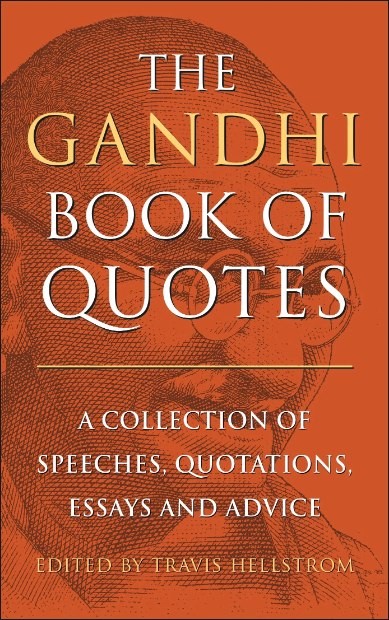
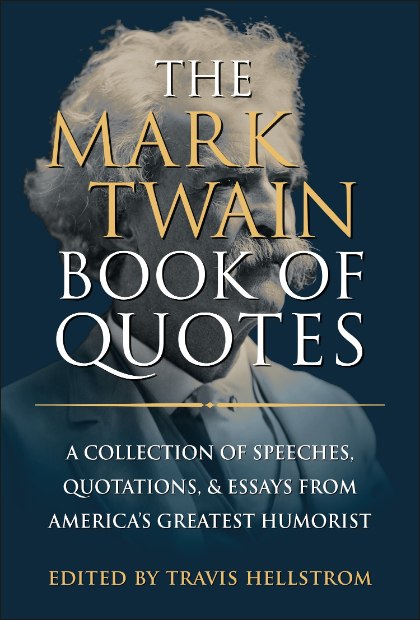
Wisdom worth keeping.
I gathered these for The Leonardo da Vinci Book of Quotes. Every Saturday morning I send one short essay in the same spirit — on optimism, purpose, and enough.
No spam. Unsubscribe anytime.