Meditations by Marcus Aurelius: Book One
The emperor’s thank-you list: who Marcus Aurelius was grateful for, and why.
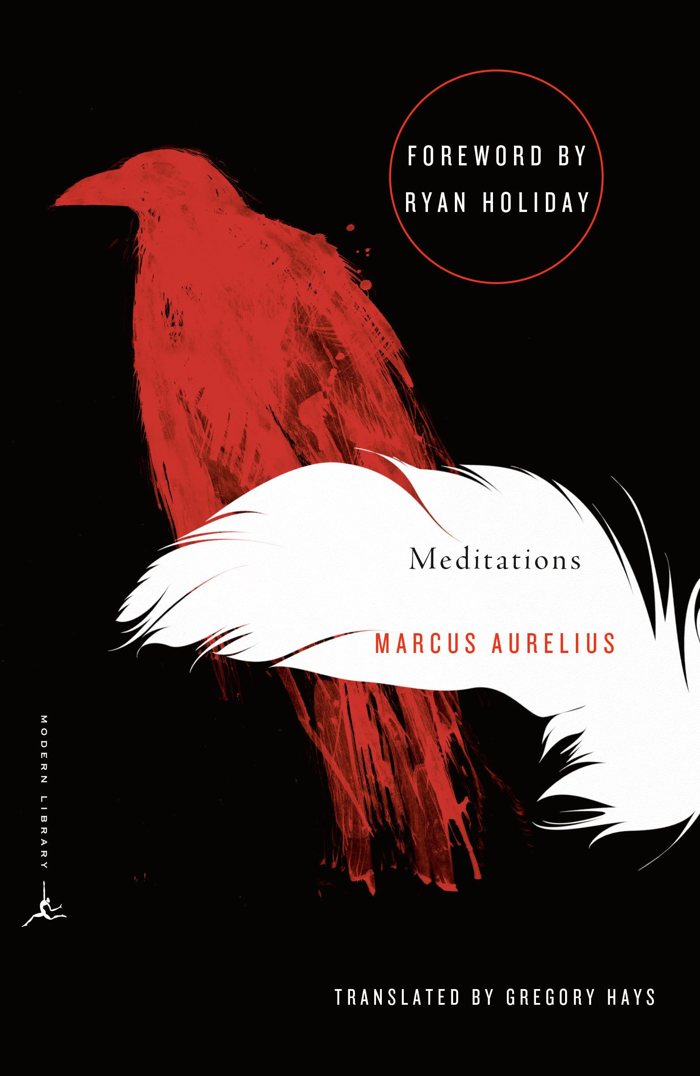
My review (2006)
Marcus thanks friends, family, teachers and gods in his life for all of the good he is able to enjoy. He specifically outlines what he has gained from these people and what he is thankful for. Of the seventeen thank you’s, five were to family members, eight were to friends and two were to teachers with the last two being for his father and the gods. Thinking on my own life, that is quite impressive. It is difficult to think of everyone I would like to thank, and for what I would like to thank them. Although several of Marcus’s friends mentioned were from when he was younger, atleast two appear to be from when he was older. Sextus and Maximus are mentioned as great examples of fathers and citizens who taught Marcus a lot. They each receive lengthy paragraphs where others received only a few lines of mention. Greatest, however, were the mentions of Marcus’s adoptive father Emperor Antoninus Pius and the gods. He goes on to describe his father as a great leader and father who taught him “strength, steadfastness, and moderation on all occasions, a spirit perfectly balanced and indomitable.” (I.16) As far as the gods go, Marcus lists thanks for “good grandparents, good parents, a good sister, good teachers, good companions, relatives and friends – almost all of them good.” (I.17) Last, he goes on to thank the gods for “the fact that my body has stood up so long under the strain of the life I lead…for not having done anything I would later regret during one of my frequent fallings-out with Rusticus…for a wife like mine…for an unending supply of excellent teachers for my children…for dreams that cured me from coughing up blood and from vertigo and for the guidance of the oracle at Caieta, ‘It’s up to you!’” Ending Book One, Marcus writes “All these good things came “from the hand of God and with the help of Fortune.”
This is part of my 2006 series on Meditations: Introduction, Prologue, and Book One.
The big ideas in Meditations
Meditations is the private notebook of a Roman emperor, written around 170–180 AD, mostly during military campaigns, and never meant for anyone else to read. Book One, the one I wrote about, is his list of thanks. The other eleven books are his reminders to himself about how to live. The ideas he keeps coming back to:
- Start with gratitude. Book One is a practice in itself: name the people who made you who you are, and exactly what each one gave you.
- Focus on what you control. Your judgments, choices and actions are yours; almost everything else isn’t. Peace comes from putting your energy where it belongs.
- It’s your opinion that hurts you. Things don’t disturb us; our judgments about them do. Change the judgment and the hurt changes.
- Expect difficult people, and be kind anyway. He reminds himself each morning that he’ll meet ungrateful, rude and selfish people — and that they’re his kin, made for cooperation.
- Everything changes; life is short. Emperors and empires come and go. Remembering that keeps you humble and makes today matter.
- Do your work. Get out of bed and do the work of a human being, for the common good, without needing credit.
My Highlights
My Kindle copy of Meditations, in Gregory Hays’s translation, has 10 highlights, all in Books Two and Three, the two books right after the one my notes above are about. I didn’t type any notes in it, so here are 7 of the 10.
Each is retold in plain words, with its book and Kindle location so you can find Marcus’s own.
- Highlights
Most highlighted: Book Three, 7.
See the numbers
| Pages | Highlights |
|---|---|
| Book Two | 3 |
| Book Three | 7 |
This Kindle edition records locations, not print pages.
Then make your own picks. You get three flags. Stick them on the three ideas you would keep.
Other people
Expect them in the morning
Start each day by telling yourself you will meet people who are rude, ungrateful and dishonest, and that they act that way because they can’t tell good from bad.
Book Two, Kindle location 924
Your own mind
Your happiness, in your hands
Stop handing your happiness to other people’s minds. Respect yourself enough to keep it.
Book Two, Kindle location 947
Busy is not a purpose
If outside things keep pulling you around, make time to learn something worth learning. And watch for the other trap: people who work hard all their lives with no aim behind any of it.
Book Two, Kindle location 948
Whose praise counts
A good person doesn’t chase praise from people who can’t even meet their own standards.
Book Three, Kindle location 1050
How to carry yourself
Cheerful on your own
Keep a cheerfulness that doesn’t need anyone else, and a calm that isn’t on loan from other people.
Book Three, Kindle location 1054
What isn’t good for you
Nothing is doing you good if it makes you break a trust, lose your shame, or turn hateful, suspicious or two-faced.
Book Three, Kindle location 1069
Neither too low nor too high
Don’t grovel and don’t look down on anyone. Don’t make excuses and don’t dodge.
Book Three, Kindle location 1077
Your three flags
I send one short essay every Saturday morning, on optimism, purpose and enough.
The Workbook
Three of the highlights above, turned into questions you can answer.
What you write is saved in this browser and nowhere else.
Tomorrow morning
Who might test your patience tomorrow? Write how you want to meet them.
Whose hands
Where have you let someone else’s opinion decide how you feel? How would you take it back?
Your own good mood
What lifts your mood that needs nobody else? When will you do it this week?
Resources
- Meditations on Wikipedia
- Marcus Aurelius on my Inspirations wall
- More book summaries and reviews on Books I Love